Tossing and turning at night? If you're looking for a natural way to improve your sleep, binaural beats can be a gentle yet powerful aid. By encouraging your brain to enter slow-wave states associated with sleep, they can help you drift off faster and enjoy deeper rest. Here's how to do it right.
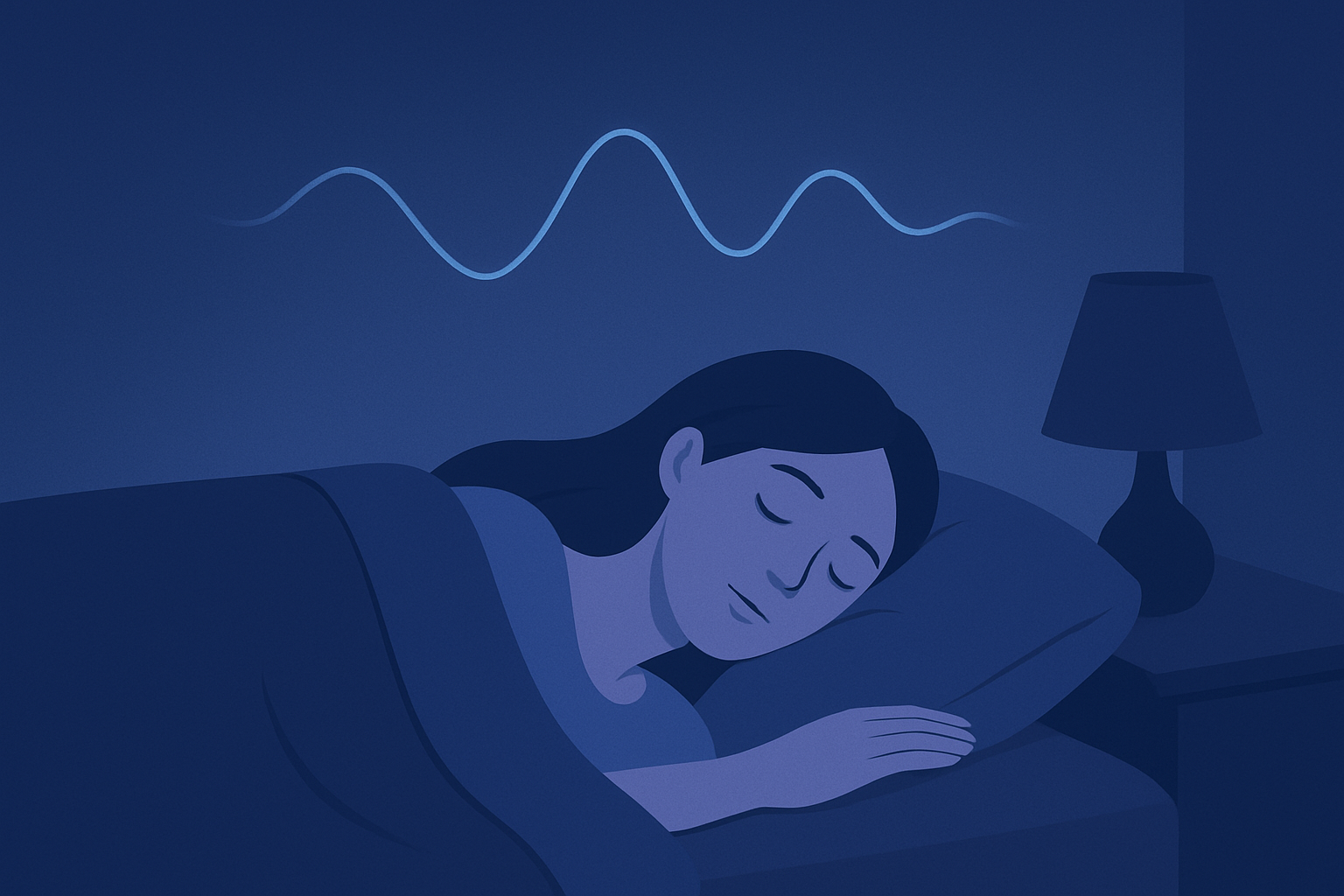
The Sleep Frequencies: Delta and Theta Waves
Your brain produces different waves when you're asleep than when you're awake. The key is to guide your mind towards these slower frequencies.
- Delta Waves (1-4 Hz): This is the hallmark of deep, dreamless sleep. It's the state where your body does most of its physical repair and recovery. A beat between 2 Hz and 3.5 Hz is ideal for encouraging this state.
- Theta Waves (4-8 Hz): This range is associated with lighter stages of sleep, dreaming (REM sleep), and deep relaxation. A 6 Hz or 7 Hz beat can be perfect for quieting a racing mind as you're trying to fall asleep.
If you're not sure where to start, check out our list of top presets for deep sleep and relaxation.
A Simple Routine for Better Sleep
- Create a Calm Environment: Dim the lights and eliminate distractions. Your bedroom should be a sanctuary for sleep.
- Get Comfortable Headphones: Since you'll be lying down, sleep-friendly headphones (like soft headbands or flat earbuds) are highly recommended.
- Choose Your Frequency: Start with a Theta beat (e.g., 6 Hz) for 10-15 minutes to relax your mind. Then, switch to a deep Delta beat (e.g., 2.5 Hz) for the rest of the time.
- Set a Low, Comfortable Volume: The tones should be easily audible but not intrusive. It should be a gentle background hum, not a loud sound.
- Be Consistent: Like any new routine, consistency is key. Try using binaural beats every night for a week to see how your body responds.
Using binaural beats for insomnia can be a game-changer. This natural sleep aid works by gently guiding your brain into the right state for rest. Ready to try it tonight? Use our generator to create a pure Delta wave beat and start your journey to better sleep.
Frequently Asked Questions
What frequency is best for deep sleep?
How long should I listen to binaural beats for sleep?
Can binaural beats really help with insomnia?
What type of headphones are best for sleeping with binaural beats?
Should I use Delta or Theta waves for sleep?
Scientific References
- Wahbeh H, et al. (2007). Self-reported effects of binaural beat technology on the sleep quality of patients with chronic pain. Journal of Alternative and Complementary Medicine.
- Chaieb L, et al. (2015). Effects of binaural beats on the human EEG during wakeful relaxation. Neuroscience Letters.
- Lane JD, et al. (1998). Binaural auditory beats affect vigilance performance and mood. Physiology & Behavior.
- Garcia-Argibay M, et al. (2019). Binaural auditory beats affect long-term memory. Frontiers in Human Neuroscience.
- Jirakittayakorn N, et al. (2018). The effects of 10-Hz binaural beats on visuospatial working memory. Journal of Cognitive Enhancement.